

Video: The Boy Who Cried Wolf
Using Chinese Fables to Build Language and Culture
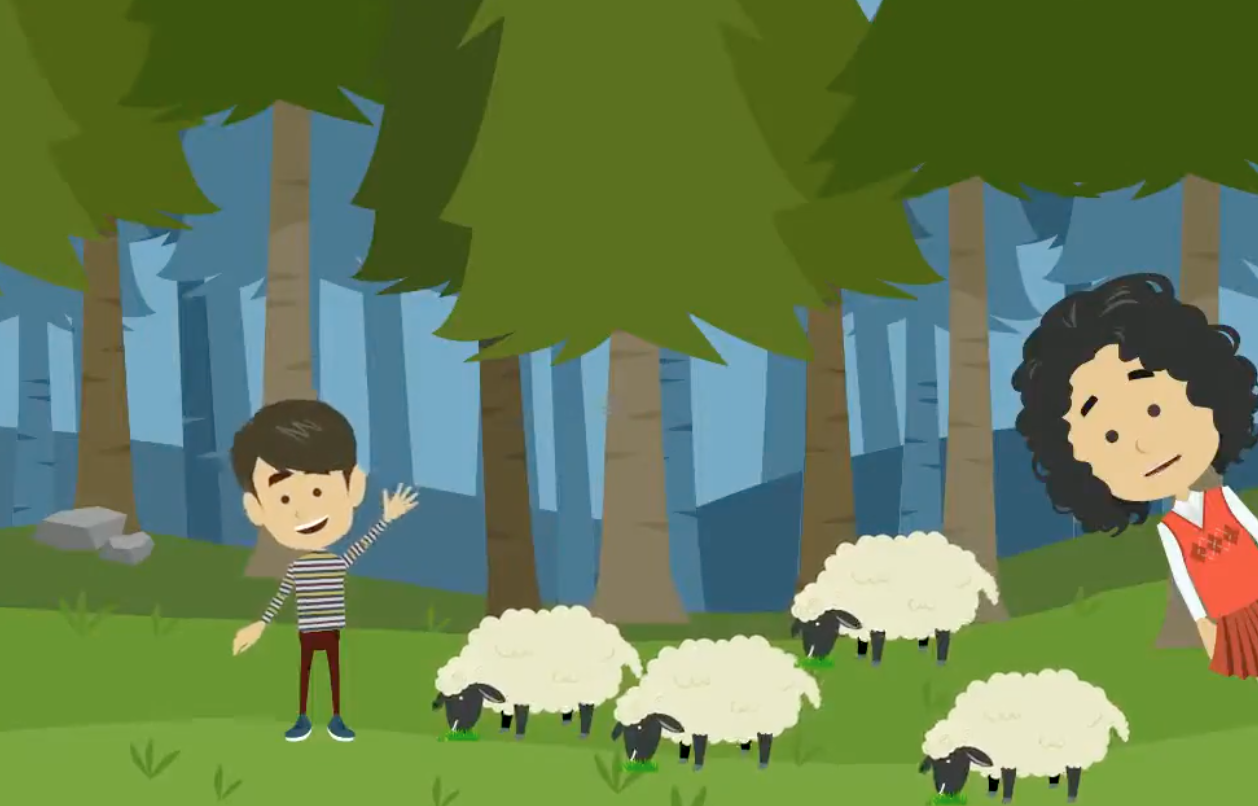
Short storytelling videos are a wonderful way to introduce both language and culture in the Mandarin classroom. The video “The Boy Who Cried Wolf” presents a traditional moral story in Chinese, giving students the opportunity to hear simple narrative language while following a familiar plot. ()
Teachers can begin by playing the video once so students understand the story. During a second viewing, pause to highlight useful vocabulary such as 男孩 (boy), 狼 (wolf), 说谎 (to lie), 帮忙 (help), and 农夫 (farmer). Students can notice how these words repeat throughout the story, which helps reinforce comprehension.
Key Vocabulary
男孩 (nánhái)
boy
牧羊人 / 牧童 (mùyángrén / mùtóng)
shepherd / shepherd boy
羊 (yáng)
sheep
狼 (láng)
wolf
村民 (cūnmín)
villagers
山 (shān)
mountain / hill
大叫 (dà jiào)
to shout loudly
帮忙 (bāngmáng)
to help
骗人 / 说谎 (piàn rén / shuō huǎng)
to lie / to trick people
真的 (zhēn de)
real / true
没有人 (méiyǒu rén)
no one
后来 (hòulái)
later
终于 (zhōngyú)
finally
相信 (xiāngxìn)
to believe